At a glance
Golden Week is the busiest travel period in Japan. Kyoto, already one of the country’s most visited cities, becomes something else entirely. If you’re visiting during Golden Week, this guide covers what to expect, what to avoid, and where to go instead.
Download Kyoto Unknown free on the App Store →
When is Golden Week in 2026?
Golden Week runs from Saturday 2 May to Wednesday 6 May in 2026. The public holidays are:
- 29 April — Showa Day. A day honouring the birthday of Emperor Showa. This year it falls on a Wednesday, a week before the main cluster.
- 3 May — Constitution Memorial Day. Marks the 1947 constitution.
- 4 May — Greenery Day. A day for appreciating nature.
- 5 May — Children’s Day. Look for koinobori, carp streamers, flying from houses and public buildings.
- 6 May — Substitute holiday. Because Constitution Memorial Day falls on a Sunday in 2026, May 6 (Wednesday) becomes a substitute public holiday, extending the cluster to five consecutive days off.
Many Japanese workers take the days between these holidays off, creating a stretch of up to ten consecutive days. The result is the largest domestic travel surge of the year. Trains are full, highways gridlocked, hotels booked months in advance.
Why Kyoto gets hit hardest
Kyoto receives over 50 million visitors a year in normal times. During Golden Week, the city absorbs a concentrated wave of domestic tourists on top of the international visitors who are already there.
The reason is straightforward. Kyoto is the cultural capital. It’s where Japanese families go for a short break. It’s close enough to Osaka, Kobe, and Nagoya for a day trip. And because the same handful of sites appear in every guide, the crowds don’t spread evenly across the city. They stack up at the same ten or fifteen spots, at the same times, creating bottlenecks that turn a temple visit into a queue.
This is the distribution problem we built Kyoto Unknown to address. It doesn’t go away during Golden Week, it gets worse.
Where the crowds hit hardest
These are the places that go from busy to unmanageable during Golden Week. None of them are bad, they’re famous for a reason. But visiting them between 10am and 4pm during the holiday stretch is a very different experience from visiting at any other time of year.
Fushimi Inari
The most visited site in Kyoto at any time. During Golden Week the lower torii gates become a slow-moving queue. The further up the mountain you go the thinner the crowd gets, but the first 20 minutes of the trail can feel like a train platform at rush hour.
Arashiyama bamboo grove
The main path through the bamboo is roughly 500 metres. During Golden Week you will share it with hundreds of people at any given moment. The approach from Togetsukyo Bridge is just as packed. If you want Arashiyama without the crowd, take the Sagano Sightseeing Railway and Hozugawa river boat — it approaches Arashiyama from the other direction and most day-trippers never see that side.
Philosopher’s Path
Normally one of the more pleasant walks in the city. During Golden Week the narrow canal-side path fills up and the pace drops to a shuffle, particularly between Ginkaku-ji and Nanzen-ji.
Nishiki Market
Already shoulder-to-shoulder by late morning on a normal weekend. During Golden Week the narrow covered street becomes genuinely difficult to move through. Some stalls can’t physically serve customers because the crowd blocks access.
Kiyomizu-dera
The approach streets, Ninenzaka and Sannenzaka, are the real problem. The temple itself manages flow reasonably well, but getting there and back during peak hours is an exercise in patience.
Best times of day to visit busy spots
If you want to see the famous sites during Golden Week, timing is everything.
Before 8am. Most temples open between 6am and 8am, but Fushimi Inari is open 24/7 and the gates are lit through the night, so it’s always accessible. The first hour after sunrise is a different world. Fushimi Inari at 6:30am is quiet, beautiful, and yours. By 9am it’s not.
After 4pm. Day trippers from Osaka and Kobe start heading home around 3pm. By 4pm the pressure eases noticeably at most sites. Evening light at Kiyomizu-dera is better than midday light anyway.
Lunchtime at temples, morning at markets. When the crowds break for lunch, temples clear out temporarily. Conversely, hit Nishiki Market as early as possible, by noon it’s too late.
Weekdays within Golden Week. If any days fall between holidays and aren’t part of the official break, they’re dramatically quieter. Check which days are actual public holidays versus days people are choosing to take off. The difference is real.
Where to escape during Golden Week
These are places that stay relatively quiet even when the rest of Kyoto is overwhelmed. Most of them are in the Kyoto Unknown app and all of them are recommended by people who live here and know where to go when the city fills up.
Fushimi Castle and the Fushimi district
Most Golden Week visitors to Fushimi go to the shrine and leave. The castle grounds and the wider Fushimi district, with its sake breweries and canal walks, are five minutes away and largely empty. The Gekkeikan Sake Museum is one of the best things in the area and never has a queue.
Choraku-ji
Above Maruyama Park, up a stone path lined with lanterns. While the crowds pour through Maruyama Park and on to Kiyomizu-dera, almost nobody turns uphill. Even during Golden Week you might be the only visitor.
Ohara
Forty minutes by bus from central Kyoto, deep in the northern mountains. Sanzen-in temple sits in a moss garden that most day-trippers never reach because of the distance. The village around it is tiny, a handful of pickle shops, a few family-run restaurants, and farmland. During Golden Week, Ohara operates on a different frequency from the rest of the city.
Kurama and Kifune
The Eizan Railway runs north out of Demachiyanagi and reaches Kurama in about 30 minutes. Kurama-dera is a mountain temple you reach via cable car or a steep forest path, and the onsen at the base of the mountain is one of the best places in greater Kyoto to spend a Golden Week afternoon. Walk over the ridge to Kifune for riverside restaurants that serve lunch on platforms over the stream. Far enough from the centre that day-trippers rarely make it.
Mount Hiei
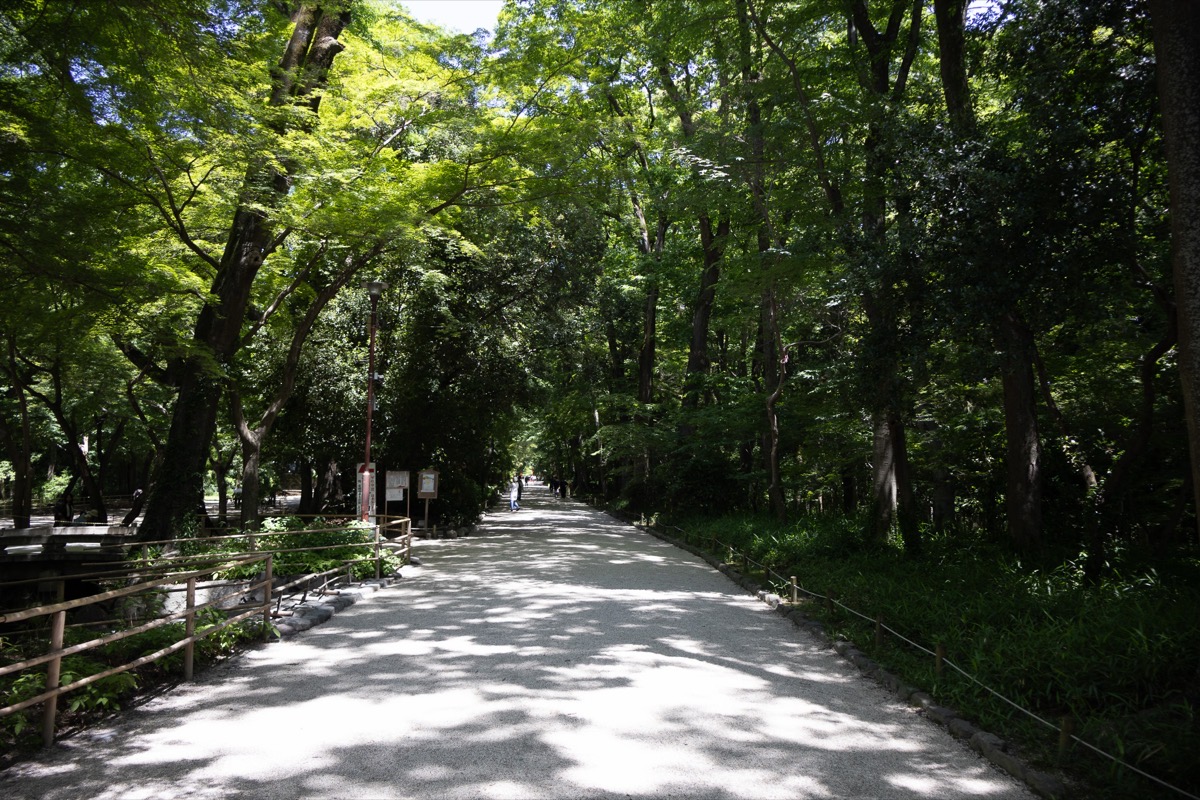
The cable car and ropeway from Yase take you out of the city entirely. The summit is cooler, forested, and almost completely free of the Golden Week crowds below. Enryakuji is there if you want a temple, but the mountain itself is the point.
Kamigamo Shrine
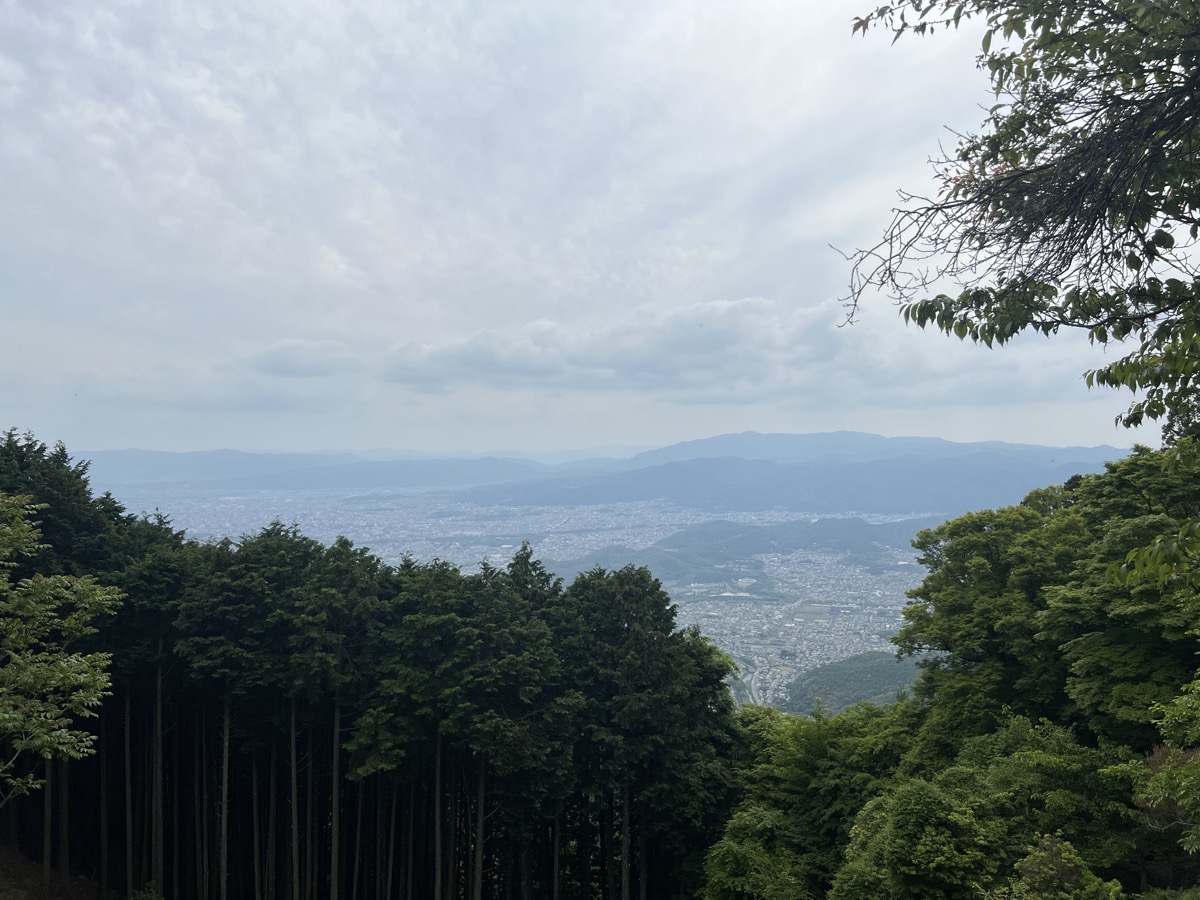
One of Kyoto’s oldest and most important shrines, but the neighbourhood around it still feels like a village. The sand cones in the courtyard, the old priest houses outside the gates, the quiet residential streets. During Golden Week you can visit in the morning and barely see another tourist. If you’re in Kyoto through mid-May, Aoi Matsuri on May 15 brings a 1,400-year-old Heian court procession through both Shimogamo and Kamigamo — one of Kyoto’s most extraordinary days.
Rooftop bars in the evening
When the day-trip crowds leave, the city opens up. An evening on a rooftop in central Kyoto is one of the best things you can do during Golden Week, the view, the air, the feeling of the city exhaling after a busy day. The Kyoto Unknown app has a few rooftop spots locals go to when they want a quiet drink with a view. Golden Week evenings are when they’re at their best. For more on where to go after dark, see our Kyoto After Dark guide.
Practical tips for Golden Week
Book everything now. Hotels, ryokan, restaurants, the Sagano Sightseeing Railway, anything with limited capacity sells out weeks in advance for Golden Week. If you haven’t booked, do it today.
Reserve restaurants. Many restaurants require reservations during Golden Week, even ramen shops take walk-in lists by late morning. Book the sit-down dinners you care about before you arrive.
Get an IC card before you arrive. Queues at ticket machines during Golden Week are long. Load an ICOCA at a quiet station or use Apple Pay Suica and avoid them entirely.
Avoid Kyoto Station on peak days. The station itself becomes a bottleneck. If you’re travelling to or from Kyoto on 2, 3, or 5 May, allow extra time. Consider using Shijo or Karasuma instead if your route allows it.
Carry cash. Smaller temples, market stalls, and many restaurants are still cash-only. During Golden Week, ATM queues get longer too. Withdraw what you need the day before.
Eat early or eat late. Lunch between 11:30am and 1pm at popular restaurants means waiting. Eat at 11am or 2pm and you’ll walk straight in.
Use the morning. This is the single most useful piece of advice for Golden Week. Between 6am and 9am, Kyoto is still Kyoto. After 10am, it’s a different city. Set an alarm.
A note from Kyoto Unknown
Golden Week is exactly the kind of moment this app was built for. When the main circuit is overwhelmed, the places in Kyoto Unknown are the ones that stay manageable. They’re quieter by nature, chosen specifically because they’re not on the standard tourist loop.
If you’re visiting Kyoto during Golden Week and want a shortlist of places that won’t be packed, the app has you covered. Browse by mood, check the map, and build a collection for each day. Everything works offline, which matters when you’re in a backstreet trying to avoid the crowd on the main road.
The app is free forever. No ads, no tracking, no accounts, no paid tier — here’s our promise.
Download Kyoto Unknown
Free on the App Store. No account, no ads, no tracking.
Download free on the App Store →
Frequently asked questions
When is Golden Week 2026? The main cluster runs from Saturday 2 May to Wednesday 6 May 2026. Showa Day on 29 April is also a public holiday. May 6 is a substitute holiday because Constitution Memorial Day falls on a Sunday. Many people take the full stretch off.
Is Kyoto worth visiting during Golden Week? Yes, with planning. The famous sites are genuinely crowded, but Kyoto is a large city with far more to offer than the main tourist circuit. Visit popular spots early in the morning or late in the afternoon, and spend the middle of the day at quieter places. The city is at its most beautiful in early May, warm, green, and full of energy.
How crowded is Kyoto during Golden Week? The main tourist sites see two to three times their normal visitor numbers. Some spots like Fushimi Inari and the Arashiyama bamboo grove become difficult to enjoy between 10am and 4pm. Areas outside the standard tourist loop remain relatively quiet.
Should I book hotels in advance for Golden Week? Yes. Book as early as possible. Central Kyoto hotels sell out weeks or months ahead for Golden Week. Consider staying slightly outside the centre, Fushimi, the area near Demachiyanagi, or even across the border in Shiga, for better availability and lower prices.
What’s the weather like in Kyoto during Golden Week? Early May in Kyoto is warm, usually 20-25 degrees, with low humidity. It’s one of the most pleasant times of year. Cherry blossom season is over but the fresh green of new leaves is everywhere. Rain is possible but not common. Light layers are enough.
Related reading
- Kyoto After Dark — rooftop bars, izakaya, jazz bars, and late-night spots chosen by locals. Golden Week evenings are when these places are at their best.
- Aoi Matsuri 2026 — if you’re in Kyoto through mid-May, the oldest festival procession runs on May 15 through Shimogamo and Kamigamo.
- Sagano Train & Hozugawa River Boat — the best day trip in Kyoto, and a good way to escape the Golden Week crowds entirely.
- Why we built Kyoto Unknown — the distribution problem Golden Week makes worse, and the app we built to help.
- How to Explore Kyoto on Your Own — independent travel itineraries for 2, 3, and 5 days in Kyoto.
Need help? Contact us →