At a glance
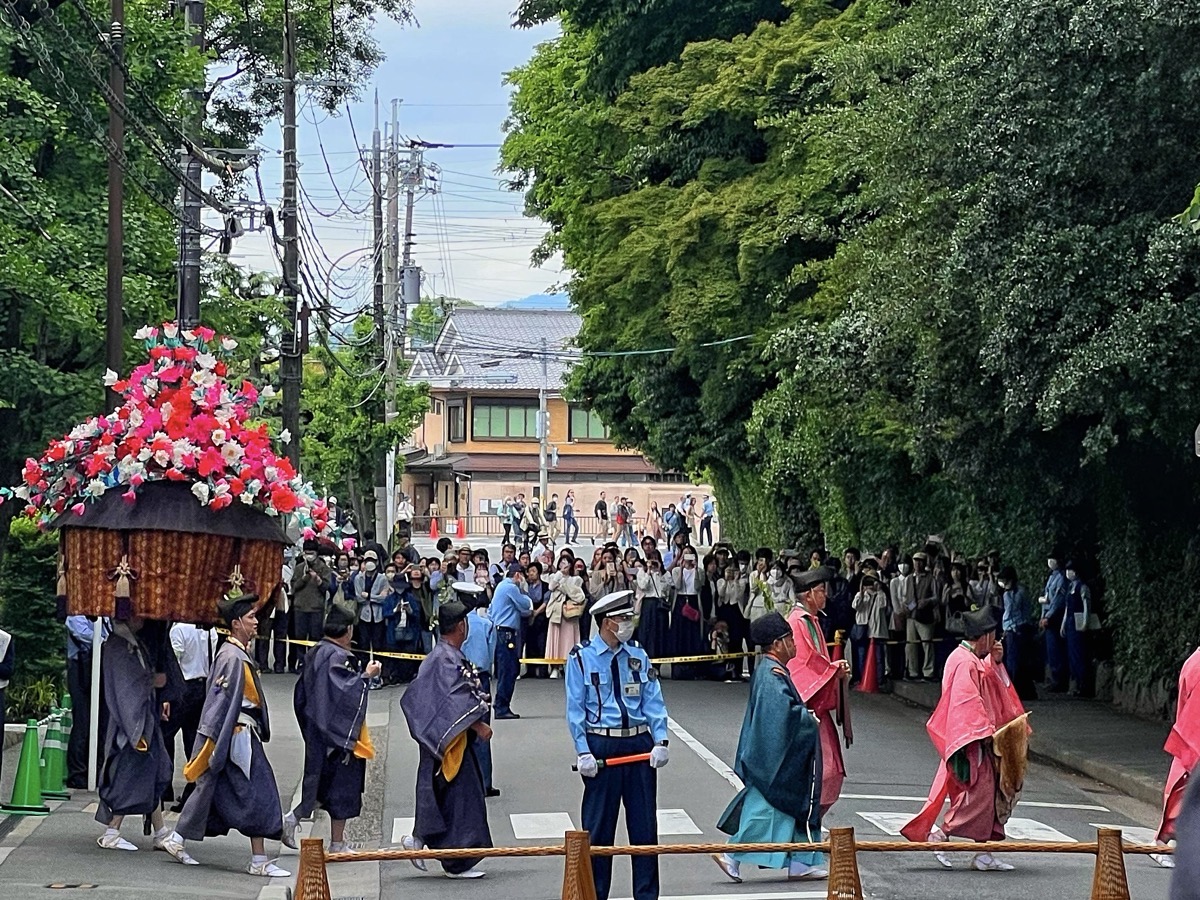
Aoi Matsuri is Kyoto’s oldest festival and one of its three great festivals, alongside Gion Matsuri in July and Jidai Matsuri in October. It is the oldest of the three. On May 15 each year, over 500 people dressed in full Heian-era court costume walk 8 kilometres from the Imperial Palace to two of the city’s most important and most overlooked shrines: Shimogamo and Kamigamo. For one day these shrines become the centre of Kyoto’s attention. The other 364 days, most visitors walk straight past them.
Both are in the Kyoto Unknown app. This guide covers the festival itself, the shrines it honours, and why they deserve a visit long after the procession has passed.
What Aoi Matsuri actually is
The name means Hollyhock Festival, though the aoi plant used (futaba-aoi) is technically a wild ginger native to Japan. Every participant, every ox cart, every horse is decorated with the heart-shaped leaves of futaba-aoi, the symbol of the two Kamo shrines. The festival’s formal name is Kamo Matsuri and it has been running since the 6th century — roughly 1,400 years.
The origin story is straightforward. During the reign of Emperor Kinmei, a succession of devastating storms destroyed crops and spread disease across the region. Diviners traced the cause to the anger of the Kamo deities, the gods enshrined at Shimogamo and Kamigamo. The Emperor sent a messenger with offerings and prayers. The storms stopped. The harvests returned. The ritual became an annual event and never stopped.
By the Heian period the Aoi Matsuri was so important that the word “matsuri” in Kyoto simply meant this one. It was the festival. When Murasaki Shikibu wrote about festival-going in The Tale of Genji, she was writing about Aoi Matsuri.
It fell out of practice during the wars of the Sengoku period, was revived in the Edo era, stopped again when the capital moved to Tokyo in 1869, and was revived once more in 1885. The shrine rituals were suspended during the Second World War but the full procession has run continuously since 1953.
The two processions
Aoi Matsuri has two parts: the Roto-no-Gi, the procession through the streets, and the Shato-no-Gi, the rituals performed at each shrine.
The procession: Roto-no-Gi
The procession stretches roughly one kilometre and includes over 500 people, around 40 horses, four oxen, two ox-drawn carriages, and a palanquin. It moves slowly. Deliberately so. There is no dancing, no music in the street, no festival energy in the way you might expect from Gion Matsuri. Aoi Matsuri is stately, quiet, aristocratic. The sound you hear is the creak of the ox carts.
The procession is in two groups. The first is the Hon-retsu, led by the Imperial Messenger, a figure originally of fifth rank or higher, riding a decorated horse and carrying a gold sword. He is accompanied by court nobles, soldiers, guards, and officials carrying chests of ritual offerings for the shrine deities. Two chests go to Shimogamo, one to Kamigamo.
The second group is the Saio-dai Retsu, centred on the Saio-dai. This is the figure most people come to see.
The Saio-dai
Historically the Saio was an unmarried woman from the imperial family chosen to serve as high priestess of the Kamo shrines. She dedicated her life to the role, undergoing rigorous training and purification rituals. The system lasted roughly 400 years, from the early Heian period until the middle of the Kamakura period.
Since 1956 the role has been filled by the Saio-dai, a representative selected each year from among unmarried women in Kyoto. The selection process is rigorous. Being chosen is considered one of the highest honours a woman can receive in Kyoto, and the announcement is covered in the press.
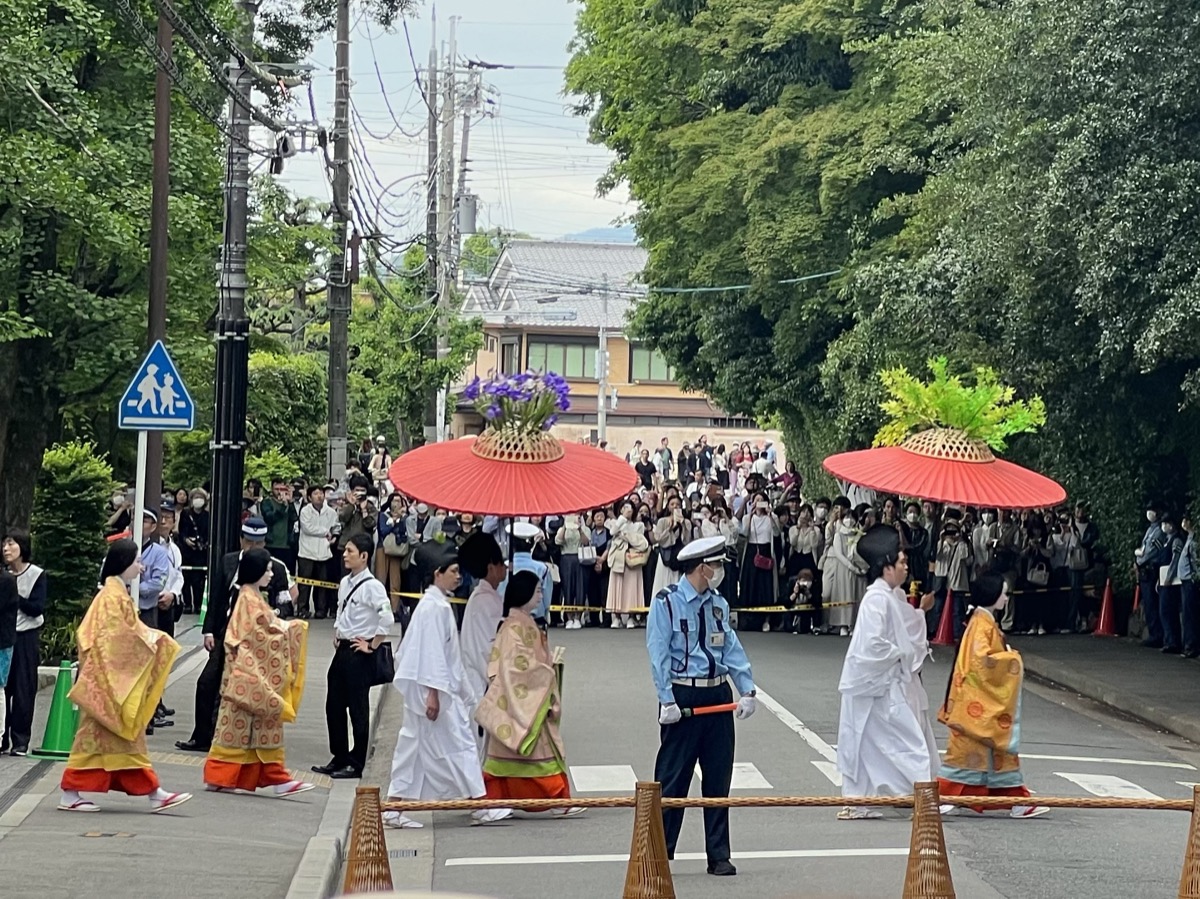
The Saio-dai wears a junihitoe, twelve layers of silk court robes weighing around 20 kilograms, and is carried through the procession on a palanquin. Before the festival she undergoes purification ceremonies, including one at the Mitarashi River within Shimogamo Shrine’s grounds on May 4th.
She is accompanied by noble women, ladies in waiting, and priestesses, all in Heian-era dress. It is one of the only opportunities in modern Kyoto to see the full spectacle of Heian court costume in motion.
The shrine rituals: Shato-no-Gi
When the procession arrives at each shrine, the public spectacle gives way to sacred ritual. The Imperial Messenger reads the imperial rescript, praising the deities and requesting their continued favour. Sacred offerings are presented. Horses circle the dance pavilion three times. Ceremonial dance is performed to gagaku court music. A galloping horse ritual follows, the descendant of the original rite that ended the storms 1,400 years ago.
The Shato-no-Gi is the most important part of the festival — more significant than the procession itself. It is the original purpose: the ritual petition to the Kamo deities for the safety and prosperity of the people. The procession exists to deliver the offerings. The shrine rituals are where they are received.
The Shato-no-Gi is not fully open to the public. Parts can be observed from the shrine grounds at Shimogamo, where the rituals take place over roughly two hours before the procession continues to Kamigamo.
Shimogamo Shrine
Shimogamo is where Aoi Matsuri pauses. The procession arrives around 11:40am, the shrine rituals are performed, and the procession does not leave again until around 2:20pm. If you are going to spend time at one location during the festival, this is the one.
But the shrine itself is the deeper story.
Shimogamo predates Kyoto as a capital. It was established in the 6th century, and there are artefacts here from the Yayoi period, roughly 2,000 years ago. When Emperor Kanmu chose this location for his new capital in 794, the Kamo shrines were already ancient.
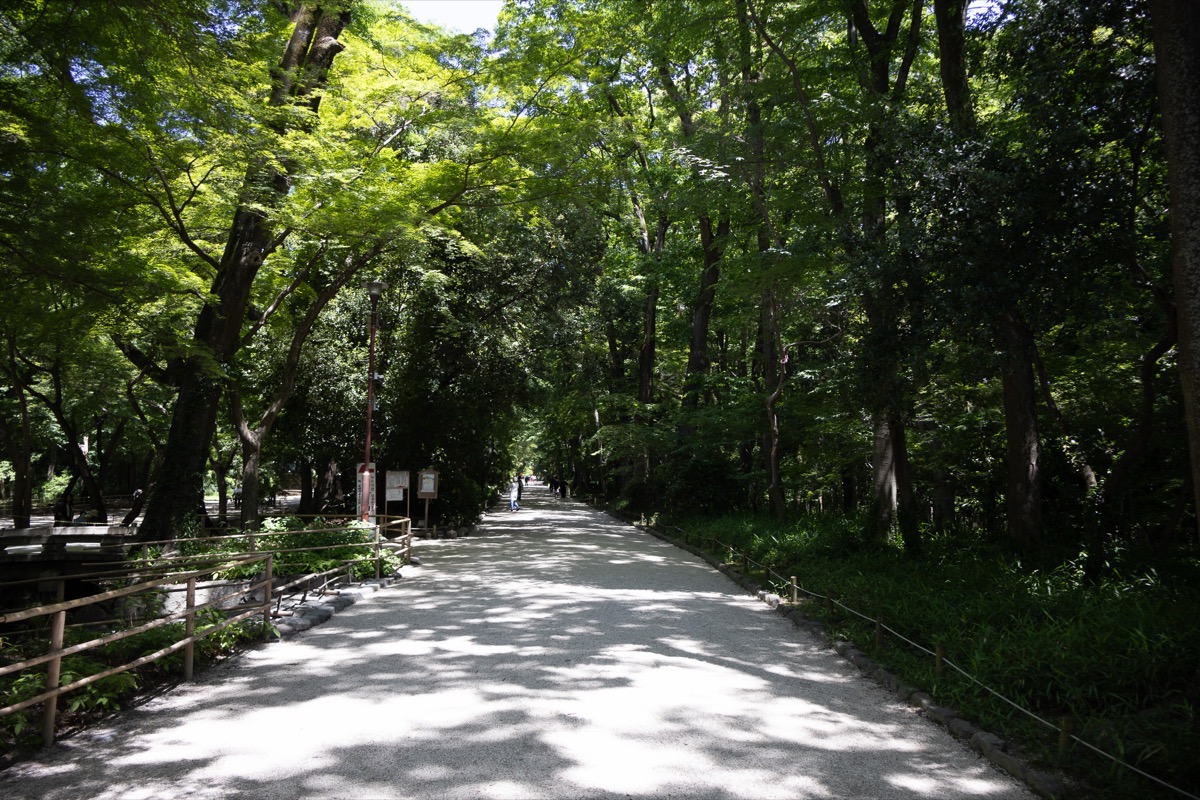
The shrine sits within Tadasu no Mori, a primeval forest of 12 hectares in the middle of the city. The trees are 600 years old and older. The forest existed before the shrine, and the name Tadasu no Mori has been translated as “Forest of Truth” or “Forest of Correction.” It appears in The Tale of Genji. Walking through it is one of the most unexpected experiences in Kyoto — a genuine old-growth forest surrounded by a modern city.
During Aoi Matsuri the procession enters through Tadasu no Mori, and because the trees block the surrounding buildings from view, the effect is of watching a Heian-era scene unfold in a Heian-era setting. This is why the paid seats at Shimogamo are considered the best viewing spot for the festival. The atmosphere is something the roadside spots cannot replicate.
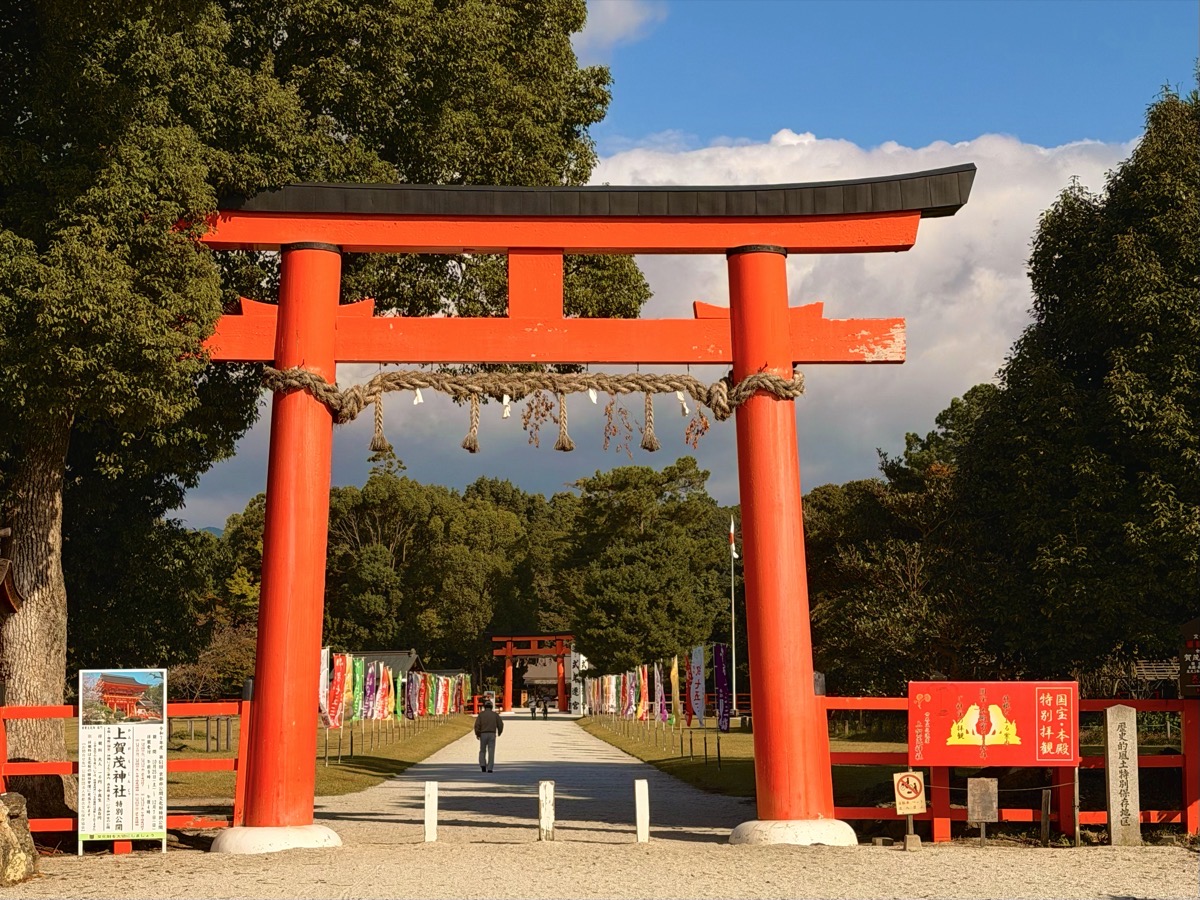
The rest of the year, Shimogamo is remarkably quiet. It is a UNESCO World Heritage site, one of the oldest shrines in Japan, and most visitors to Kyoto never go. The distribution problem at work again.
Kamigamo Shrine
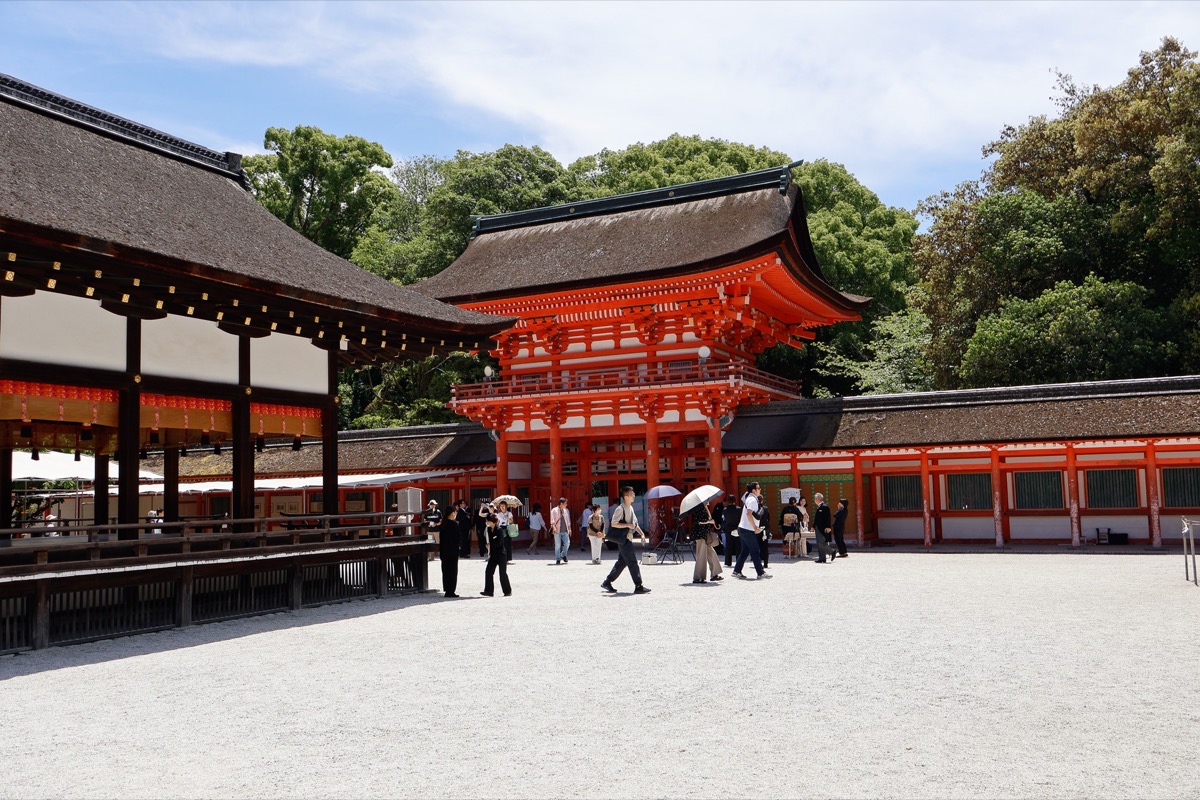
Kamigamo is where the procession ends. The head of the parade arrives around 3:30pm. The final Shato-no-Gi is performed here, dance rituals and horse races take place, and the festival concludes.
Kamigamo is even older than Shimogamo. Traditionally dated to 678, it is one of the oldest shrines in all of Japan. The deity enshrined here, Kamo Wakeikazuchi, is said to have descended from heaven onto a sacred mountain to the north. The shrine was built at the point where the deity was welcomed.
The first thing you notice at Kamigamo is the tatesuna, two perfectly shaped cones of white sand in the courtyard. They represent the sacred mountain where the deity descended. They are rebuilt regularly and their precision is striking. They are one of the most distinctive visual elements of any shrine in Kyoto and most tourists have never seen them.
Outside the shrine gates is a neighbourhood of old priest houses — traditional residences where the families who served the shrine once lived. Some have been preserved, others converted. The residential streets around Kamigamo feel like a village, not a city, and during the rest of the year there are almost no tourists here.
Aoi Matsuri day is different. The shrine fills with spectators, food stalls appear, and the final rituals draw a crowd. It is the one day of the year when Kamigamo feels busy. The contrast with every other day makes both experiences worth having.
Schedule and route: May 15, 2026
| Time | Location / event |
|---|---|
| 10:30 | Procession departs from the Kenreimon gate of Kyoto Imperial Palace |
| 11:15 | Procession crosses the river near Shimogamo Shrine |
| 11:40 | Head of procession arrives at Shimogamo Shrine. Shato-no-Gi rituals begin. |
| 14:20 | Procession departs Shimogamo, heads north along Shimogamo-hondori |
| 14:40 | Passes Rakuhoku High School |
| 14:55 | Crosses Kitaoji Bridge over the Kamo River |
| 15:30 | Head of procession arrives at Kamigamo Shrine. Final Shato-no-Gi rituals performed. |
The entire procession takes roughly an hour to pass any single point. Flash photography is prohibited as it startles the horses and oxen.
If it rains on May 15, the procession is postponed to May 16. The decision is announced around 6pm the evening before on the official shrine websites.
Where to watch
Kyoto Imperial Palace (start, 10:30)
The procession departs from the Kenreimon gate. Paid seats here have the best backdrop — the Heian-era palace buildings with mountains in the distance. Premium “Royal Seats” include live commentary in English via earphones and a commemorative folding fan. Bring your own earphones and a smartphone.
Tadasu no Mori at Shimogamo Shrine (11:40)
Our recommended spot. The forest blocks the modern city entirely and the procession feels transported in time. Paid seats are available but the entrance closes at 11:00 for security so arrive early. The two hours of shrine rituals give you time to see everything.
Kamo River bank between Shimogamo and Kamigamo (14:20 onwards)
Free, relatively uncrowded, and the row of trees along the bank makes a natural backdrop. This is where locals watch. Less formal, more relaxed.
Kamigamo Shrine (15:30)
The procession’s final destination. Some paid seats are available on the day, historically ¥1,000 or ¥5,000 depending on location. Food stalls are set up here and the atmosphere is livelier than Shimogamo.
Paid seating
Tickets range from ¥3,500 to ¥20,000 depending on location and type. (Prices shown are from the 2025 festival — check Kyoto City Tourism’s official guide and Ticket Pia for confirmed 2026 pricing.) Sales typically open from April 1st at Ticket Pia, convenience stores (Lawson, Family Mart), and Kyoto tourist information centres. For the Imperial Palace and Shimogamo, book in advance. Kamigamo often has day-of availability.
Etiquette
Aoi Matsuri is a religious ritual, not a parade in the entertainment sense. The atmosphere is solemn and respectful. A few things to keep in mind:
- No flash photography. The horses and oxen are live animals and can be startled. The marshals take this seriously.
- Keep voices down as the procession passes. This is not Gion Matsuri with its street festival energy. The pace is slow and intentionally quiet.
- Follow the lead of locals. If you are watching from the shrine grounds, when others bow, it’s appropriate to bow. You don’t need to perform the rituals but showing awareness of them is appreciated.
- Don’t cross the procession route while it’s moving. Wait for marshals to signal when crossing is safe.
- Arrive early for any location. The best free spots go quickly and the paid seating areas close their gates well before the procession arrives.
How to get there
- Kyoto Imperial Palace: 5 minutes walk from Imadegawa Station (Karasuma Subway Line). Or bus to Karasuma Imadegawa stop.
- Shimogamo Shrine: 12 minutes walk from Demachiyanagi Station (Keihan Line). Or bus 205 to Shimogamo-jinja-mae.
- Kamigamo Shrine: Bus 4 from Kyoto Station to Kamigamo-jinja-mae. The nearest train station is Kitayama, about 25 minutes walk, so the bus is the better option.
Traffic restrictions are in place on the day. Use public transport, not taxis. Buses near the route will be delayed. Allow extra time for everything.
Related events at the two shrines
Aoi Matsuri is not a single-day affair. Several related ceremonies take place at Shimogamo and Kamigamo in the weeks leading up to May 15. If you are in Kyoto earlier, these are routinely empty — the full festival atmosphere without the crowds.
- April — Kamo Kyokusui no En at Kamigamo Shrine. An elegant Heian-era poetry game: participants in full court dress compose waka poems beside a winding stream while a floating sake cup drifts past them. Held on April 13 in recent years; confirm the 2026 date on the Kamigamo Shrine site. Admission is typically ¥1,000 and limited to around 150 visitors.
- May 4 — Saio-dai purification at the Mitarashi River within Shimogamo Shrine. The Saio-dai performs a ritual cleansing in the river in preparation for the festival. Open to the public and far less crowded than the main event.
- May 5 — Kamo Kurabe Uma at Kamigamo Shrine. Horse racing in Heian-era costume, dating back more than a thousand years. Sacred horse preparations begin at 10:00am, the opening ritual is at 1:00pm, and the race itself starts at 2:00pm.
- May 12 — Mikage Matsuri at Shimogamo Shrine. A procession to Mount Mikage at the foot of Mount Hiei to welcome the sacred spirit of the deity back to the shrine. Includes dance performances in Tadasu no Mori.
All dates follow the historical pattern but can vary slightly — confirm on the Shimogamo and Kamigamo shrine websites closer to the date.
Why these shrines deserve a visit without the festival
Aoi Matsuri brings tens of thousands of people to Shimogamo and Kamigamo for one day. The rest of the year these two shrines sit quietly in the north of the city, largely ignored by the tourist circuit.
This is exactly the kind of place Kyoto Unknown was built for. Two UNESCO World Heritage sites, among the oldest shrines in Japan, both with deep history and exceptional settings, and both routinely empty of tourists. If you’re visiting during Golden Week, both shrines stay peaceful even while the rest of the city is overwhelmed.
Shimogamo’s Tadasu no Mori forest alone is worth the visit: a 12-hectare old-growth forest in the middle of a city, centuries-old trees, a sense of stillness that you simply do not find at the famous sites. Kamigamo’s tatesuna sand cones, its quiet residential neighbourhood, the old priest houses outside the gates — these are not secondary attractions. They are among the most important sacred sites in the country.
If you visit on May 15, you’ll see them at their most spectacular. If you visit any other day, you’ll see them at their most peaceful. Both are worth it. Both are in the Kyoto Unknown app.
Download free on the App Store →
Frequently asked questions
When is Aoi Matsuri 2026? May 15, 2026. The procession departs the Kyoto Imperial Palace at 10:30am and arrives at Kamigamo Shrine around 3:30pm. If it rains, the procession is postponed to May 16. The decision is announced around 6pm the evening before.
Is Aoi Matsuri free to watch? Yes. You can watch from anywhere along the route for free. Paid seats at the Imperial Palace, Shimogamo Shrine, and Kamigamo Shrine range from ¥3,500 to ¥20,000 and typically go on sale from April 1st.
How long does the Aoi Matsuri procession take? The full route takes about five hours from start to finish. The procession itself takes roughly one hour to pass any single viewing point.
What is the Saio-dai? The Saio-dai is an unmarried woman from Kyoto selected each year to represent the historical Saio, a priestess from the imperial family who served the Kamo shrines during the Heian period. She wears a junihitoe, twelve layers of silk robes weighing around 20 kilograms, and is carried on a palanquin.
What does “aoi” mean? Aoi means hollyhock. The heart-shaped leaves of the futaba-aoi plant (technically a wild ginger native to Japan) are the symbol of the Kamo shrines and are used to decorate every participant, animal, and carriage in the procession. The plant is specially cultivated for the festival.
Can I visit Shimogamo and Kamigamo without the festival? Yes, and you should. Both shrines are open year-round, free to enter, and almost empty of tourists outside of Aoi Matsuri. They are among the oldest and most historically significant shrines in Japan.
How is Aoi Matsuri different from Gion Matsuri? Gion Matsuri is a festival for the people — loud, vibrant, with street food and float processions through the commercial heart of the city. Aoi Matsuri is an imperial court ritual: quiet, stately, aristocratic. One has the energy of a street party. The other has the reverence of a ceremony. Both are essential Kyoto.
Related reading
- Why we built Kyoto Unknown — the thinking behind the app and why Kyoto has a distribution problem, not a tourism problem.
- Golden Week in Kyoto 2026 — if you’re planning to be in Kyoto for Aoi Matsuri, you’re in the city during Golden Week too. Here’s how to enjoy both.
- Kyoto After Dark — rooftop bars, izakaya, jazz bars, and late-night spots chosen by locals. The best way to end a festival day.
- How to Explore Kyoto on Your Own — why you don’t need a guide, and 2/3/5-day itineraries for planning around the festival.
Need help? Contact us →